Last Updated: October 26, 2026
Quick Summary
Proactive network monitoring is the continuous observation of your network infrastructure, devices, and traffic patterns to identify and resolve problems before they affect your operations. By catching issues early through automated alerts, your team can fix problems on your timeline rather than responding to crises, preventing downtime and protecting revenue.
- Proactive monitoring detects issues like memory leaks, disk space filling up, and network overload hours or days before they cause outages.
- Early detection prevents service disruptions that damage customer trust and business reputation.
- Continuous monitoring provides security visibility to detect intrusion attempts and unusual data access patterns before attackers cause damage.
- Small and medium businesses benefit most from proactive monitoring because they have smaller IT teams and less tolerance for downtime.
- Start by monitoring your most critical systems first, establish baseline performance metrics, and configure alert thresholds carefully to avoid alert fatigue.
Table of Contents
- What Proactive Network Monitoring Does for Your Business
- Proactive vs Reactive Network Monitoring: Why the Difference Matters
- Early Detection Prevents Network Issues Before They Disrupt Work
- Network Downtime Prevention Protects Revenue and Reputation
- Stronger Security Visibility Through Continuous Monitoring
- Network Monitoring Best Practices for Small and Medium Businesses
- Choosing Network Monitoring Tools That Fit Your Infrastructure
- Start Your Proactive Monitoring Strategy Today
- Frequently Asked Questions
What Proactive Network Monitoring Does for Your Business
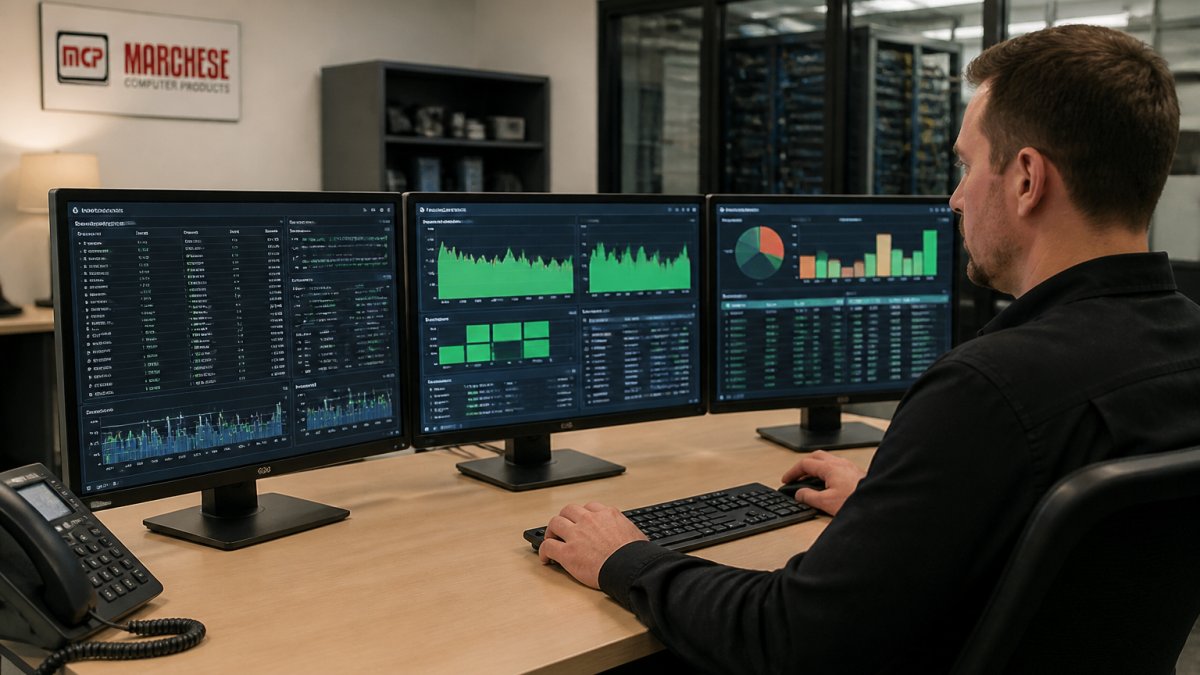
Proactive network monitoring is the continuous observation of your network infrastructure, devices, and traffic patterns to identify and resolve problems before they affect your operations.
This approach fundamentally changes how businesses manage technology. The difference isn’t subtle. When you catch a network issue at 2 AM through automated alerts, you can fix it before employees arrive and discover broken systems. That’s the core value: problems get resolved on your timeline, not on the timeline of a crisis.
Proactive network monitoring tracks several critical elements simultaneously. It measures network traffic flowing through your infrastructure, monitors the health and availability of individual devices and servers, watches for security threats and intrusion attempts, and records performance metrics like latency and response times.
The practical benefit is operational continuity. Your team spends less time firefighting and more time on strategic work. Employees don’t lose hours to unexpected outages. Customers don’t experience service disruptions. Revenue doesn’t get interrupted by preventable infrastructure failures.
Proactive vs Reactive Network Monitoring: Why the Difference Matters
The distinction between these two approaches shapes everything about how your business operates. Reactive monitoring means you respond only after something breaks, after employees report that systems are down, after customers complain about slow service, after a security breach is discovered. Your IT team becomes a crisis response unit, working in emergency mode to restore service and investigate what went wrong.
Proactive monitoring flips this model. Your systems watch continuously for early warning signs. When performance begins to degrade or suspicious activity appears, alerts go out immediately. Your team investigates and fixes the underlying cause before it cascades into a full outage.
Here’s what this means in practice. With reactive monitoring, you might discover a server is running out of storage space only after applications start crashing and users can’t access files. By then, service is already interrupted and damage is done.
The same principle applies to security. Reactive monitoring detects intrusions after attackers have already gained access to your network. Proactive monitoring identifies suspicious login attempts, unusual data transfers, and other indicators of compromise before attackers can establish a foothold. Early detection is the difference between stopping an attack and managing a breach.
Early Detection Prevents Network Issues Before They Disrupt Work
The value of catching problems early cannot be overstated. When you detect an issue before it causes service disruption, you control the response. Your team investigates during normal business hours, implements a fix without time pressure, and documents the solution for future reference.
Early detection works because network problems rarely appear without warning. Gradual performance degradation, rising error rates, increasing latency, and unusual traffic patterns all precede major failures. These warning signs exist in your monitoring data long before users notice anything wrong. The question is whether you’re watching for them.
Common issues that early detection catches include memory leaks in applications that slowly consume more resources until the system crashes, disk space filling up as logs accumulate, network switches becoming overloaded as traffic grows, and security vulnerabilities being exploited by attackers testing your defenses.
Consider a typical scenario: a database server’s memory usage creeps upward over several days. With proactive monitoring, an alert triggers when usage reaches 80%, giving your team time to investigate the root cause and implement a fix. Without proactive monitoring, the server runs out of memory, applications crash, and your team scrambles to restore service while customers experience downtime.
Network Downtime Prevention Protects Revenue and Reputation
Downtime carries a cost that extends far beyond the immediate disruption. Every minute your systems are unavailable, your business loses productivity, revenue, and customer trust. The longer an outage lasts, the more damage accumulates. Downtime also damages your reputation, customers who experience service failures remember that failure and consider switching to competitors.
Proactive network monitoring prevents many of the outages that would otherwise occur. By catching issues early and allowing your team to implement fixes before problems cascade, you avoid the service interruptions that disrupt work and frustrate customers. This protection has real business value.
The cost of preventing downtime is far lower than the cost of experiencing it. A managed IT service provider monitoring your network can offer significant value compared to the cost of downtime. This makes proactive monitoring one of the highest-ROI investments a business can make in its technology infrastructure.
Network downtime also exposes your business to security risks. When systems go down and your team is focused on restoration, security monitoring often takes a back seat. Attackers know this and sometimes trigger incidents intentionally to distract security teams while they exploit vulnerabilities elsewhere.
Stronger Security Visibility Through Continuous Monitoring
Security threats evolve constantly, and attackers often spend weeks or months inside a network before launching their main attack. Early detection of intrusion attempts, unusual data access patterns, and other indicators of compromise is essential to stopping attacks before they cause damage. Proactive network monitoring provides this visibility.
Continuous monitoring watches for suspicious activity that might indicate a breach in progress. This includes login attempts from unusual locations, data transfers to external destinations, privilege escalation attempts, and other behaviors that deviate from normal patterns.
The alternative, discovering a breach only after significant damage is done, is far more costly and damaging. By the time a breach is discovered through reactive means, attackers have typically stolen data, planted backdoors for future access, or caused other damage.
Proactive monitoring also provides the data needed for security incident response. When an incident occurs, your team needs detailed logs and records of network activity to understand what happened, how long the attacker had access, and what systems were compromised. Proactive monitoring systems maintain this historical data, enabling faster and more thorough incident investigation.
Network Monitoring Best Practices for Small and Medium Businesses
Small and medium businesses often assume that proactive network monitoring is only for large enterprises with dedicated IT teams and large budgets. Why every small business needs a managed IT service provider explains how outsourced IT support makes proactive monitoring accessible and affordable for SMBs.
The first best practice is to define what you’re actually monitoring. Identify the network devices, servers, applications, and metrics that matter most to your business. You don’t need to monitor everything, focus on the systems and services that directly impact operations and revenue.
The second practice is to establish baseline performance metrics. Before you can detect abnormal behavior, you need to understand what normal looks like. Collect data over several weeks to establish baseline performance for network traffic, response times, error rates, and other key metrics.
The third practice is to configure alert thresholds carefully. Too many alerts and your team becomes numb to them, missing real problems in the noise. Too few alerts and you miss early warning signs.
A fourth practice is to document what each alert means and what actions your team should take in response. When an alert fires at 2 AM, your team needs to know immediately whether it requires urgent action or can wait until morning.
Explore how proactive managed IT support helps small businesses reduce downtime(page:1)
Choosing Network Monitoring Tools That Fit Your Infrastructure
Selecting the right monitoring tool requires understanding your environment and your team’s capabilities. The wrong tool creates more work than it solves. The right tool integrates smoothly with your existing infrastructure and provides the visibility you actually need.
Start by assessing your infrastructure. What types of devices and systems do you need to monitor? Are you running primarily on-premises servers, cloud services, or a hybrid mix? Do you have remote employees whose devices and connections need monitoring?
Consider your team’s technical expertise. Some monitoring tools require significant configuration and expertise to set up and maintain. Others are designed for simpler deployment and operation. Smaller IT teams often benefit from tools that require less ongoing configuration and maintenance.
Evaluate integration capabilities. Your monitoring tool needs to integrate with your existing IT infrastructure, your servers, network devices, cloud services, and security tools. Poor integration means manual work to correlate data from different sources and respond to incidents.
Learn how outsourced IT support services can implement and manage network monitoring for your business(page:2)
Finally, consider your budget and the value you’ll receive. Proactive network monitoring is an investment in preventing downtime and protecting your business.
Start Your Proactive Monitoring Strategy Today
Building a proactive monitoring strategy begins with a clear understanding of what you’re trying to protect and what problems you’re trying to prevent. The most effective approach starts small, monitor your most critical systems and services first, establish baselines, configure alerts, and build processes around responding to those alerts.
The alternative is to continue operating reactively, discovering problems only after they’ve disrupted your business. That approach is more expensive, more stressful, and more damaging to your reputation. Proactive network monitoring shifts the balance in your favor, giving your team the visibility and time needed to prevent problems rather than constantly fighting fires.
Marchese Computer Products, Inc. helps businesses across Western and Central New York implement proactive monitoring strategies tailored to their specific infrastructure and needs. Our team manages the ongoing monitoring, responds to alerts, and ensures your systems stay healthy and available.
Proactive network monitoring transforms how your business manages technology. Rather than reacting to crises, your team prevents them. Rather than experiencing unexpected downtime, you maintain continuous availability. Rather than discovering security breaches after damage is done, you detect threats early and stop them.
| Monitoring Approach | Problem Detection | Response Time | Cost Impact |
|---|---|---|---|
| Reactive | After outage occurs | Hours or days | High (crisis response) |
| Proactive | Before outage occurs | Minutes | Low (preventive action) |
| Hybrid | Early warning + escalation | Minutes to hours | Medium (balanced approach) |
Frequently Asked Questions
How does proactive network monitoring help prevent downtime?
Proactive network monitoring continuously tracks your infrastructure for signs of trouble: bandwidth saturation, latency spikes, packet loss, or unusual traffic patterns. When thresholds are exceeded, alerts notify your IT team immediately, often before users notice slowdowns. Early intervention, adjusting traffic, replacing failing hardware, or addressing misconfigurations, stops small problems from cascading into full outages. Reactive monitoring waits for users to report problems, by which time business impact has already begun.
What network issues can proactive monitoring detect before they disrupt users?
Proactive monitoring catches bandwidth bottlenecks, degraded device health, intrusion attempts, DNS resolution delays, and performance anomalies in real time. It identifies failing switches, overloaded servers, and configuration drift before they cause service loss. It also detects security threats, unusual login attempts, unexpected traffic spikes, or suspicious endpoint behavior, allowing your team to block threats before they compromise data or systems. Historical data and performance baselines help distinguish normal variance from genuine problems.
What’s the difference between network monitoring and network security monitoring?
Network monitoring tracks performance metrics: bandwidth, latency, uptime, and device health across your infrastructure. Network security monitoring focuses on threat detection: intrusion attempts, malware, unauthorized access, and policy violations. Proactive network monitoring includes both. It watches for performance degradation that might indicate a denial-of-service attack, and it alerts on suspicious user behavior or traffic patterns that signal a breach. Together, they provide full visibility into whether your network is running well and running safely.
Is proactive network monitoring worth the cost for a small business?
Yes. A single unplanned outage costs small businesses thousands in lost productivity, customer trust, and emergency repair fees. Proactive monitoring prevents most outages, reduces mean time to recovery on those that do occur, and eliminates the need for expensive emergency IT calls. It also reduces alert fatigue by filtering noise and prioritizing real threats, so your team spends time on genuine problems rather than false alarms. For businesses in Western New York managing hybrid infrastructure, cloud services, and legacy systems, proactive monitoring is essential to maintaining business continuity without scaling IT headcount.